

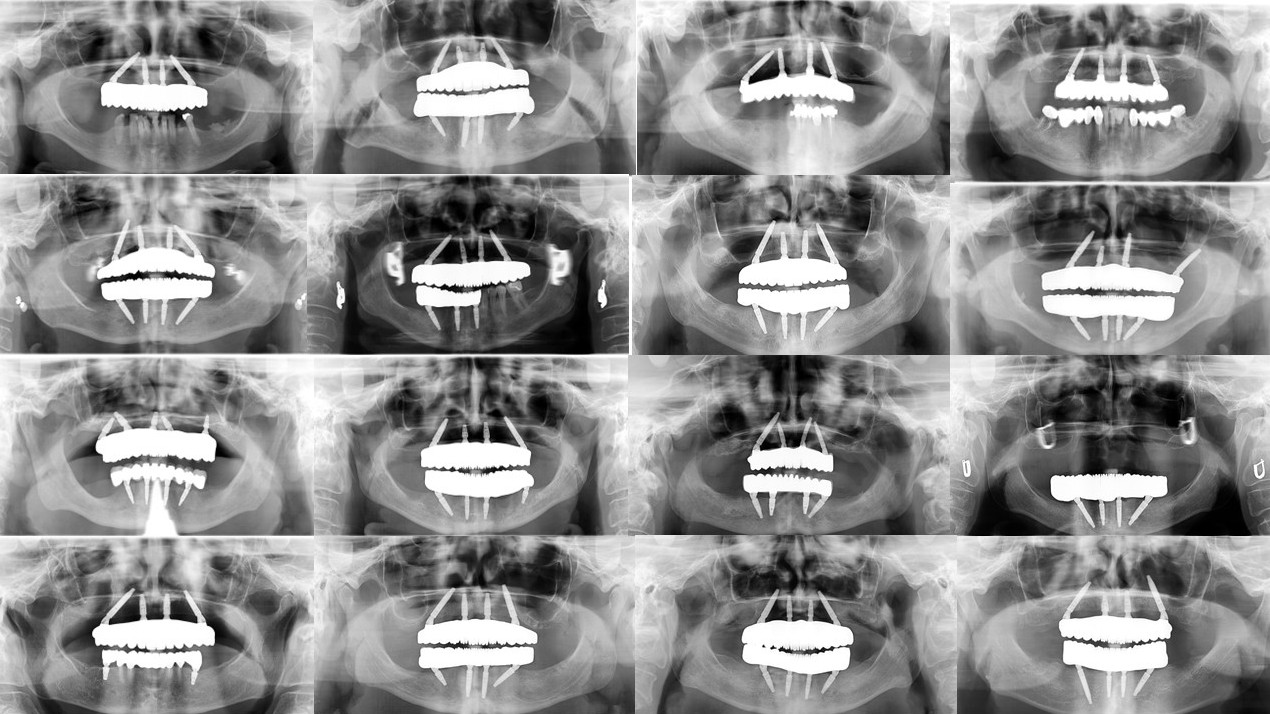
All on 4 is a protocol created by Dr. Paolo Malo, almost 30 years ago, to treat edentulous jaws without complicated graft procedures. It has since evolved, but the core principles remained and the body of scientific evidence that confirms its high success rate over long time is undeniable.
Over time, the protocol became immensely popular and prevalent, so much so, that many implant manufacturers, if not all, made All-on-4 ready components and implant designs. The name “All-on” is used in conjunction with other numbers and letter X to try to ride on its tail of success.
Still, since its introduction till this very day, there are many critics that argue against it. This article will deal with most famous arguments against its use.
Argument no. 1 – The Number of Implants
How can only four implants support a full arch fixed dental bridge? We humans love bigger numbers. Bigger is always better, right? I myself have a V6, a V8 and a V12 engine car and guess which one is my favourite? Everyone also wants more square meters, longer holidays, bigger salary and the list goes on.
But is a larger number always better or more important? As dental implants evolved from various shapes to a root shape it has unavoidably been compared to a natural tooth. But an implant is not a tooth, and there are different rules that follow. Its connection to the bone is not the same to begin with. Tooth has a periodontal ligament that absorbs the forces and implants don’t. The bone between the roots can be slim because it is vascularized, in part by periodontium. Implant offers no such blood supply and the bone between implants must have volume; in fact, we know for a fact that implants can’t be closer to each other than 3 millimetres.
Other reason we can’t compare implants to teeth is the shape of the root and number. In posterior regions of the maxilla, where bone is softer, teeth have more roots to better anchor themselves and distribute stress of chewing forces. Even wide body implants have trouble achieving primary stability in D4 bone and there are meta studies showing that implants fail more often in D4 bone.
Beside the poor quality of posterior maxilla, in full arch cases, more than 60% of first molar sites lack enough residual subantral bone height for implant placement without sinus lift procedures. But even when implants are placed with simultaneous sinus lift procedures, they can’t be loaded immediately.
To be short and not to deviate from the point, when you consider implant placement sites, where you want your implants to be stable and able to be loaded immediately by a full arch fixed prosthesis, with enough space between them, there aren’t many places to choose from.
Efficiency is also important, as any engineer will tell you, and we, doctors, are in some way engineers if you consider a human body a biological machine. We need to be aware of our resources, limitations and requirements. If you consider that most smiles show maxillary first molar barely or a some part of it, why would we restore more than twelve teeth? Why go through the trouble?
So, if the requirement is twelve teeth and we are allowed one tooth cantilever, and we need some space between implants then the perfect spread would be 2-4-6 or six implants placed with one space empty between except the anterior, where there would be two empty spaces. But as we explored, we usually don’t have enough bone volume or density in first molar region, so we can tilt those distal implants and anchor them in the anterior region, specifically in the lateral nose wall. Then we don’t have much space or need for implants between 2 and 6 position and we are left with four implants in positions 2 and 5 or 2 and 6 and decades have shown that it is enough.
Argument no. 2 – The Bone Reduction
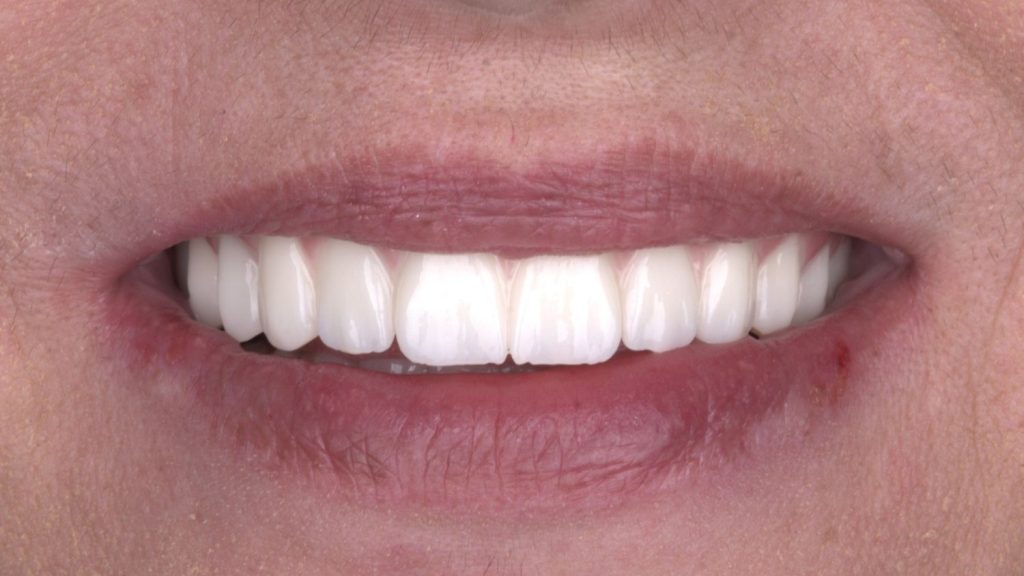
This is a big one. After years of developing bone augmentation and tissue regeneration materials and techniques—fighting for every cubic millimetre of bone volume—how can you just cut alveolar crest bone simply to achieve a high aesthetic outcome?
Bone reduction is a carefully planned part of the protocol and is never performed needlessly. It serves several critical goals:
Moving the transition line: Shifting the transition from natural mucosa to artificial gingiva above the smile line facilitates a perfect Pink Esthetic Score (PES). Yes, this is partly for the sake of aesthetics, but beauty should never be undermined. It is an aspect equally as important as function, and no clinician should be made to feel guilty for chasing it. After all, Dostoevsky said that beauty will save the world.
Levelling the bone plateau: Ensuring the implants are all on the same level allows the restoration’s intaglio surface to be flat and easily cleaned.
Removing pathology: Following periodontal disease, the bone is often full of defects that still contain pathological remnants. Filling these with graft material could lead to severe acute infections. Choosing whether to remove the compromised alveolar crest or attempt to regenerate it is the core difference between FP3 and FP1 restorations—and a true philosophical divide.
Correcting unfavourable jaw relations: Because now we can have the space to move the alveolar crest where it is needed without steep angles, which can ruin the muscle function and flip the lip when patients smile. For instance, this approach finally allows us to solve the problem of a Class III occlusion.
Argument no. 3 – Healthy Teeth Sacrifice
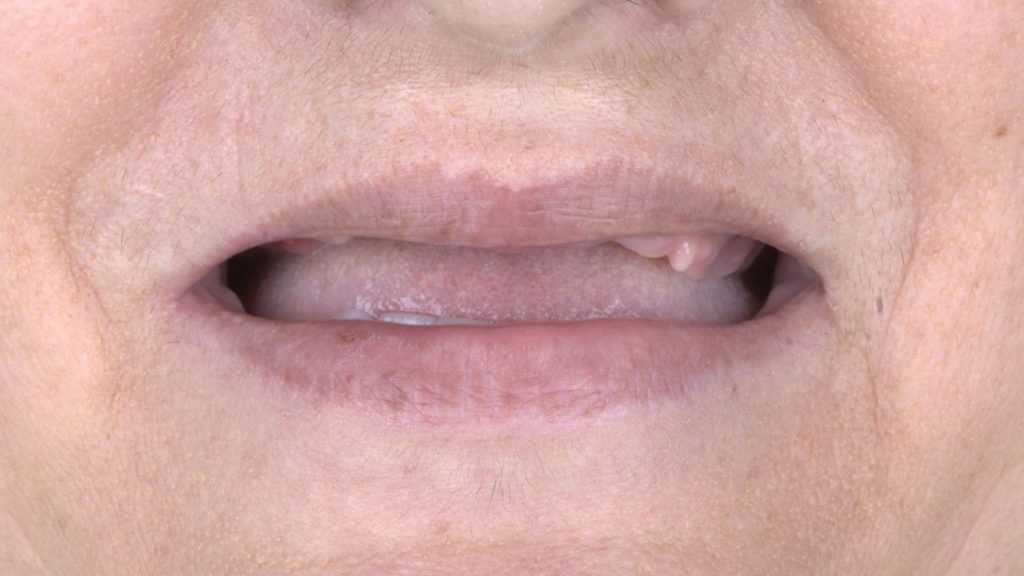
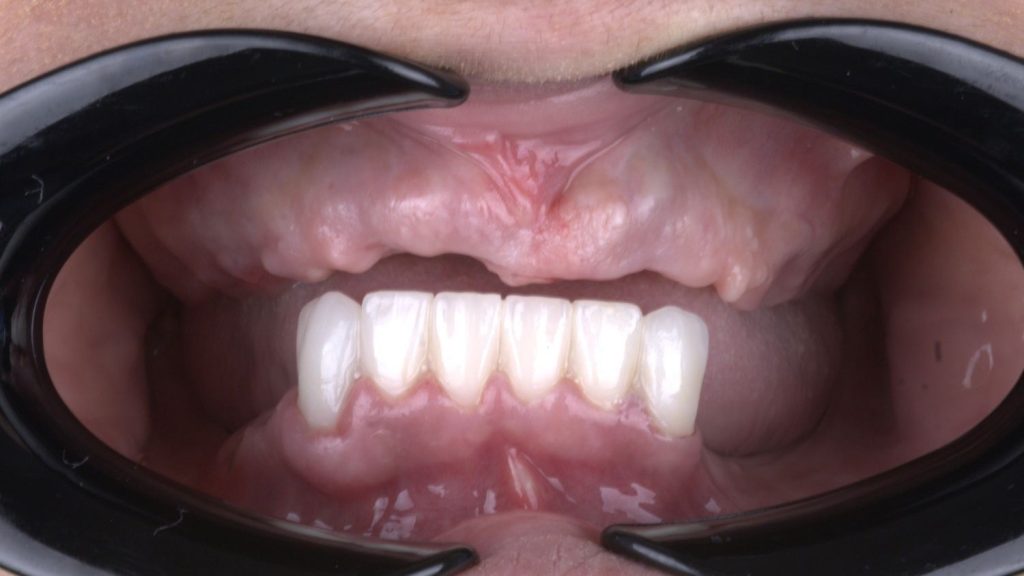
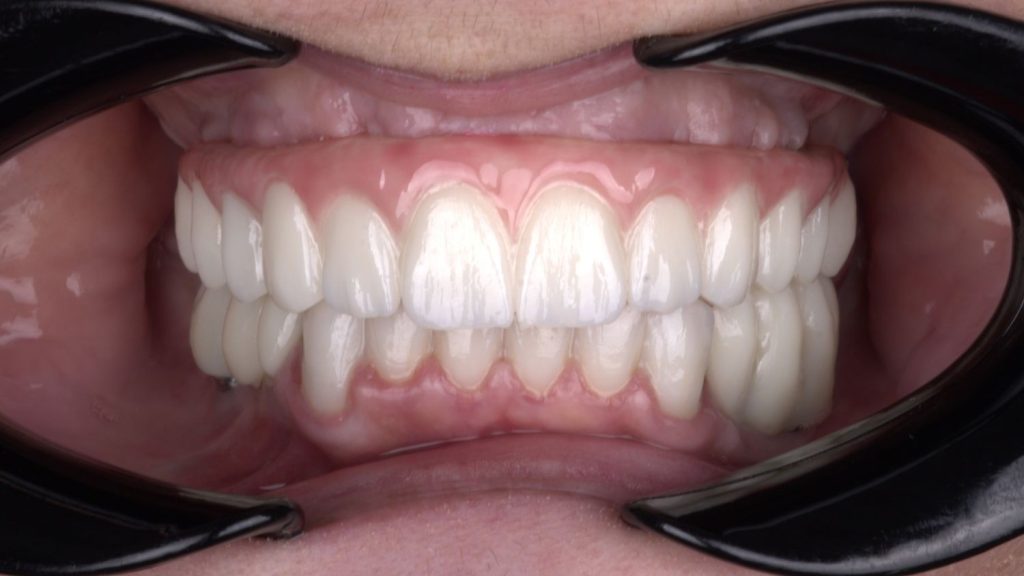
This moves the discussion into the arena of ethics. While it is true that facilitating an All-on-4 sometimes requires the removal of one or two viable teeth that are not technically terminal, focusing solely on this is an oversimplification.
The ultimate goal of any full-arch restoration is not the preservation of a single tooth at any cost. It is the comprehensive restoration of the patient’s chewing function, speech, aesthetics, cleansability, and long-term stability. The patient should only need to return for routine maintenance, not for constant revisions and endless additional procedures.
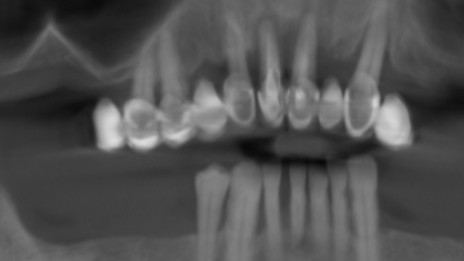
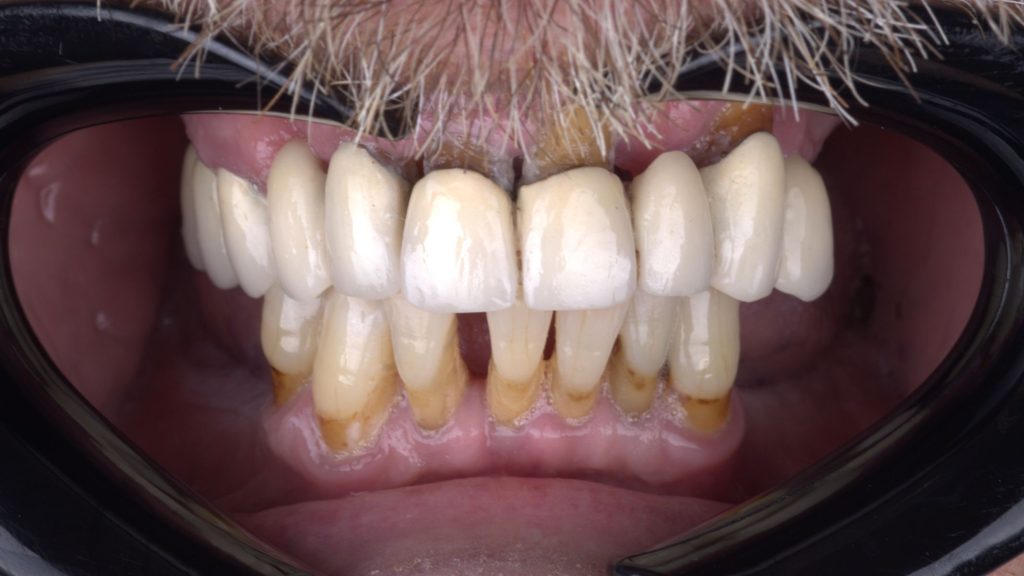
Consider a concrete clinical scenario: a patient presents with terminal-stage periodontal disease where all teeth are hopeless—except the upper canines. While these teeth are rarely perfect, they are theoretically salvageable and could remain stable for a time. However, retaining them creates two major complications:
- Surgical and biomechanical compromises: We are forced to increase the number of implants to design a restoration around the retained teeth. While this might be justifiable if it truly benefited the patient, it is often highly questionable. It creates a more complex system where tilting implants becomes risky due to the proximity of the canine roots. Consequently, to place distal implants, we are pushed back toward sinus lifts and heavy grafting—defeating the streamlined, graft-free protocol.
- Aesthetic failure: If the patient has a high smile line, mixing natural canines with implant-supported teeth creates an aesthetic nightmare. The gingival margins will be at mismatched levels, and utilizing pink artificial gingiva becomes impossible without it being visibly obvious and unappealing.
Furthermore, we must remember that the profession routinely extracts perfectly healthy, cavity-free first premolars in underage patients simply for orthodontic alignment. Therefore, when approaching full-arch rehabilitation, we cannot afford to miss the forest for the trees.
Argument no. 4: Patient Comfort
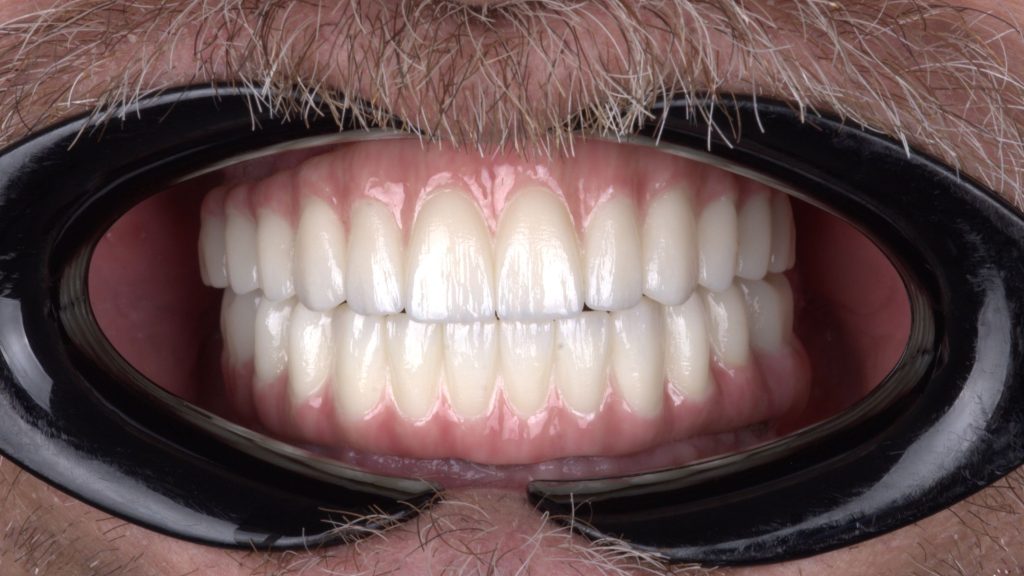
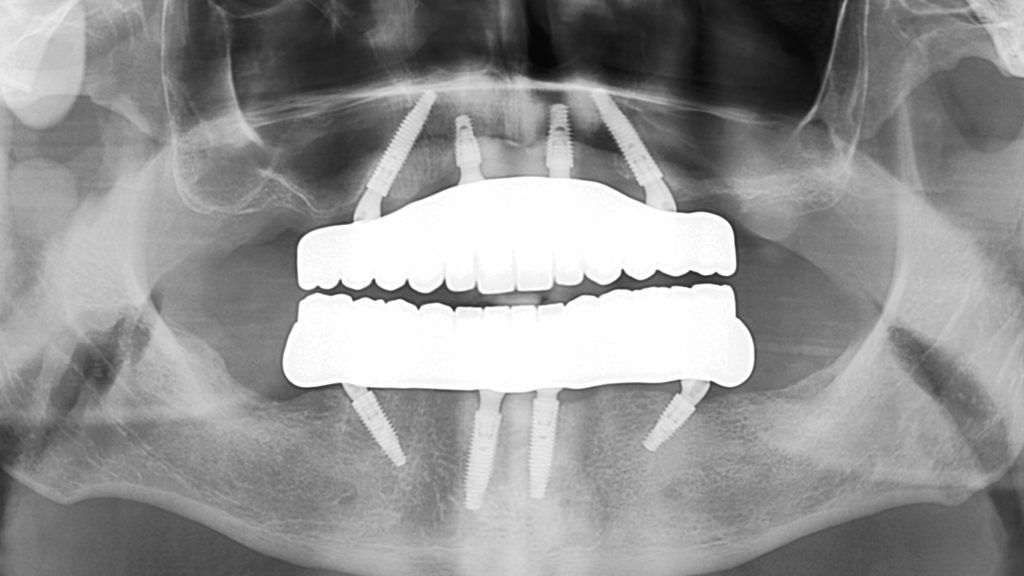
It is often hypothesized that patients experience greater comfort with restorations that possess a reduced vertical dimension, favouring FP1 over FP3 designs. This assumption stems from the logical premise that FP1 restorations replace only the anatomical crowns, omitting the prosthetic gingiva required in FP3 prostheses, thereby reducing overall bulk.
However, the clinical significance of this theoretical advantage is debatable. Given the remarkable adaptive capacity of the stomatognathic system, quantifying a definitive difference in comfort between these two fixed modalities is challenging. Current literature overwhelmingly demonstrates high patient satisfaction and acceptance rates for FP3 restorations. Conversely, direct comparative studies isolating patient-reported outcomes between FP1 and FP3 designs are sparse and fail to demonstrate any statistically significant difference in comfort.
Ultimately, the scientific consensus indicates that patient satisfaction is primarily driven by the transition from a removable prosthesis to a fixed, implant-supported solution, rather than the specific structural classification of the fixed restoration itself.
Argument no. 5: What Will We Do After All-on-4 Fails?
When all the previous arguments are scientifically challenged and dissolved, one final criticism usually remains. Critics ask: after we have removed the patient’s teeth, reduced the bone, and placed such a small number of implants, what can possibly be done when the All-on-4 fails?
The assumption itself is fundamentally flawed. It relies on projecting the catastrophic failures that plague FP1 restorations onto a completely different protocol. FP1 solutions, especially in patients with a high smile line, rely entirely on exact implant positioning and the absolute stability of gingival margins. This makes the whole approach extremely vulnerable. If an FP1 implant fails, it might be functionally replaced, but it almost always brings an aesthetic failure with it. Furthermore, clustering several implants closely together to mimic natural roots creates a prime target for peri-implantitis.
Because proponents of GBR and FP1 solutions deal with so many severe biological complications, they naturally assume that losing basal bone in an All-on-4 case would be an unrecoverable disaster.
But the clinical truth is that this does not happen. To be clear, we do occasionally lose implants in All-on-4 cases, and complications arise. However, a failed implant in native basal bone can be replaced. Because FP3 restorations are designed to hide the prosthetic transition above the smile line, minor gingival recession is not an aesthetic crisis. Even if implant threads become exposed, we can perform implantoplasty to clean the surface and save the fixture.
The entire argument of “what will we do if it fails” is a fallacy—and perhaps even a bit spiteful—because we simply do not see complete, unrecoverable failures of All-on-4 treatments when they are executed correctly. Even in cases of extreme atrophy, we have an array of graft-free protocols designed to anchor implants securely. As many of the articles on this platform demonstrate, we never truly run out of options.
Conclusion
The All-on-4 approach has proven over decades that it is not merely a viable alternative, but a highly predictable, streamlined solution that profoundly improves the quality of life for patients suffering from terminal dentition or complete edentulism. By objectively challenging the criticisms surrounding implant number, bone reduction, the extraction of failing teeth, patient comfort, and the management of complications, it becomes clear that many arguments against graft-free protocols are rooted in outdated assumptions rather than scientific reality.
Naturally, the decision to execute this protocol is never automatic. It is made only after rigorous clinical examination and precise radiological evaluation. As always, every biological, surgical, and prosthetic aspect must be meticulously considered when planning a successful full-arch reconstruction.
References
1. Padhye NM, Bhatavadekar NB. Quantitative Assessment of the Edentulous Posterior Maxilla for Implant Therapy: A Retrospective Cone Beam Computed Tomographic Study. J Maxillofac Oral Surg. 2020;19(1):125-130. doi:10.1007/s12663-019-01236-7
2. Shanbhag S, Karnik P, Shirke P, Shanbhag V. Cone-beam computed tomographic analysis of sinus membrane thickness, ostium patency, and residual ridge heights in the posterior maxilla: implications for sinus floor elevation. Clin Oral Implants Res. 2014;25(6):755-760. doi:10.1111/clr.12168
3. ELsyad MA, Elgamal M, Mohammed Askar O, Youssef Al-Tonbary G. Patient satisfaction and oral health-related quality of life (OHRQoL) of conventional denture, fixed prosthesis and milled bar overdenture for All-on-4 implant rehabilitation. A crossover study. Clin Oral Implants Res. 2019;30(11):1107-1117. doi:10.1111/clr.13524
4. Raffat EM, Shady M, Elkashty AAR, Syad ME. Comparative analysis of implant survival, peri-implant health, and patient satisfaction among three treatment modalities in atrophic posterior mandibles: a randomized clinical study. BMC Oral Health. 2025;25(1):939. Published 2025 Jun 7. doi:10.1186/s12903-025-06286-7
5. Uesugi, T., Shimoo, Y., Munakata, M., Sato, D., Yamaguchi, K., Fujimaki, M., Nakayama, K., Watanabe, T., & Malo, P. (2023). The All-on-four concept for fixed full-arch rehabilitation of the edentulous maxilla and mandible: a longitudinal study in Japanese patients with 3–17-year follow-up and analysis of risk factors for survival rate. International Journal of Implant Dentistry, 9. https://doi.org/10.1186/s40729-023-00511-0
6. Tallarico, M., Meloni, S. M., Canullo, L., Caneva, M., & Polizzi, G. (2015). Five-Year Results of a Randomized Controlled Trial Comparing Patients Rehabilitated with Immediately Loaded Maxillary Cross-Arch Fixed Dental Prosthesis Supported by Four or Six Implants Placed Using Guided Surgery. Clinical Implant Dentistry and Related Research, 18, 965-972. https://doi.org/10.1111/cid.12380
7. Margvelashvili-Malament, M., & Eckert, S. E. (2022). Prevalence of peri-implant diseases in fully edentulous patients restored with four implants supported fixed full arch prosthesis: a literature review. Frontiers of Oral and Maxillofacial Medicine, 4, 7. https://doi.org/10.21037/fomm-21-83
8. Gurgel, B. C. V., Pascoal, A. L. B., Souza, B. L. M., Dantas, P. M. C., Montenegro, S. C. L., Oliveira, A. G. R. C., & Calderon, P. S. (2015). Patient satisfaction concerning implant-supported prostheses: an observational study. Brazilian Oral Research, 29, 1-6. https://doi.org/10.1590/1807-3107bor-2015.vol29.0034
9. Cortés-Bretón Brinkmann, J., García-Gil, I., Pedregal, P., Peláez, J., Prados-Frutos, J. C., & Suárez, M. J. (2021). Long-Term Clinical Behavior and Complications of Intentionally Tilted Dental Implants Compared with Straight Implants Supporting Fixed Restorations: A Systematic Review and Meta-Analysis. Biology, 10, 509. https://doi.org/10.3390/biology10060509
10. Aalam, A. A., Krivitsky-Aalam, A., Zelig, D., Oh, S., Holtzclaw, D., & Kurtzman, G. M. (2023). Trans-sinus dental implants, for immediate placement when insufficient alveolar height is present: an alternative to zygomatic implants – surgical case series. Annals of Medicine & Surgery, 85, 51-56. https://doi.org/10.1097/ms9.0000000000000201



Leave a Reply