

Introduction
What features should a modern implant system have? How many systems should a dental practice offer? Which brand is truly the best, and should the patient be given a choice?
For a young dentist at the beginning of their implant journey, these questions are difficult to answer. Countless brands compete for attention, offering incredible success stories, discounts, and marketing ploys. At the end of the day, it is still a business.
Choosing an implant system is very similar to choosing a car. Some prioritize the economic aspect, others seek speed, and some demand absolute reliability. However, if you follow the Graft-Free Implantology (GFI) concept, you will quickly understand that every detail—mechanical and biological—is equally important.
Bias Disclosure
I was trained in the Straumann system nearly twenty years ago and have placed Standard Plus and BLT implants for most of my career. Since 2020, the bulk of the implants I place are Neodent GM Helix, which is also part of the Straumann Group. Thanks to Straumann, Demeas (the distributor for Serbia), and the ITI, I have had the privilege of attending courses and symposiums worldwide.
I chose the Neodent GM Helix as our primary system because it offers a solution for every technique and indication we perform at White Clinic Belgrade. I subscribe to the Straumann core philosophy of “Simply Doing More.”
Macro design
The Shape
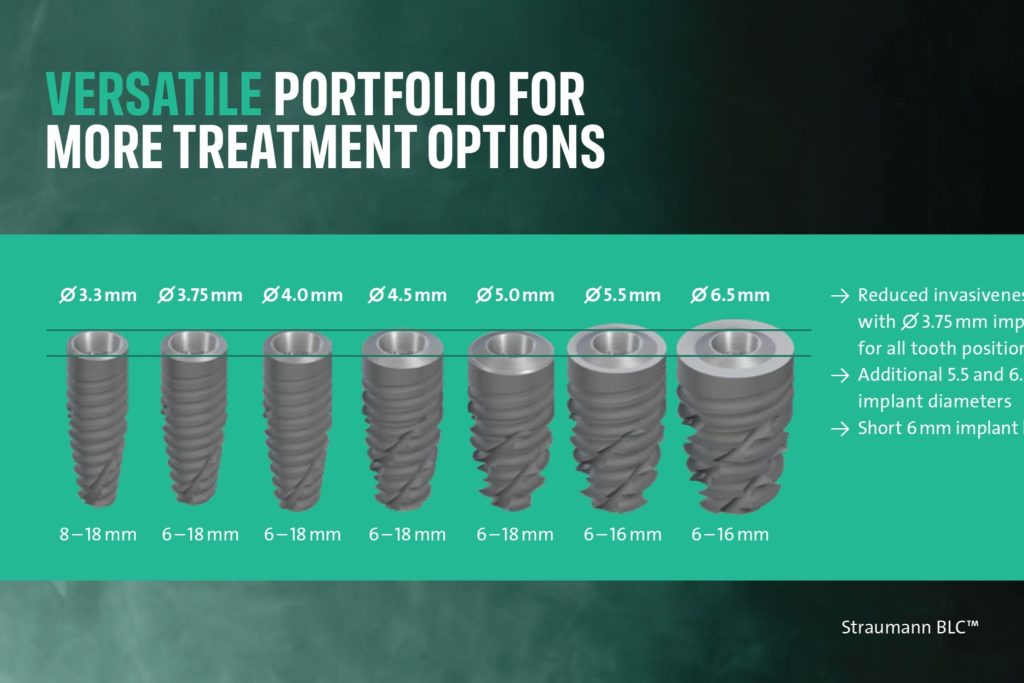
Historically, before the industry coalesced around the root-form design, clinicians utilized blades and subperiosteal frames. Once endosseous screws became the gold standard, the cylindrical shape dominated the market for decades. Today, the tapered design has emerged as the superior evolution of that cylinder, specifically engineered to navigate the complexities of native bone.
In the GFI protocol, the tapered geometry isn’t just a trend; it is a functional requirement for several critical reasons:
1. Superior Bone Engagement (The “Wedge” Effect)
Unlike cylindrical implants that rely on a precise fit along their entire length, a tapered implant acts as a biological wedge. This design allows for higher primary stability even in Type III or Type IV bone by compressing the trabeculae as the implant is seated. This is a prerequisite for the One Abutment One Time (OAOT) protocol, where immediate stability is non-negotiable.
2. Apex Precision and Cortical Anchoring
The narrow apex of a tapered implant allows the clinician to navigate tight spaces between roots or near undercut areas without compromising the crestal bone. More importantly, it enables the “engagement” of distant cortical plates (such as the nasal floor or the sinus floor wall) without requiring a wide, invasive osteotomy at the entry point.
3. Safety in Preparation: Avoiding “Drill Slip”
One of the most underrated advantages of the tapered protocol is the safety of the surgical site. Cylindrical drills, by nature of their constant diameter, have a higher tendency to “chatter” or slip, especially when encountering dense bone at an angle.
Clinical Tip: Tapered preparation is inherently more “centered.” The step-back drilling sequence provides a self-guiding path that reduces the risk of accidental perforation of anatomical structures like the mandibular canal or the maxillary sinus.
In the context of GFI For Graft-Free Implantology, this sequence is vital. It allows us to perform “under-drilling” or “under-prep” in soft bone. By stopping at a drill that is slightly narrower than the implant, we use the tapered macro-design of the implant itself to condense the bone during insertion, achieving that high primary stability required for One Abutment One Time.
Thread Design: Beyond Simple Mechanical Retention
In the past, implant threads were often viewed purely as a means of mechanical retention—simple grooves designed to hold the titanium in place while osseointegration occurred. Today, we understand that thread geometry is a dynamic tool that directly influences bone physiology and primary stability.
1. Passive vs. Active Threading
Standard cylindrical implants often featured “passive” threads that merely cut into the bone. In GFI, we prefer active, self-tapping threads. These are designed to displace and condense the trabecular bone as the implant is seated. This “bone-condensing” effect is what allows us to achieve high torque in soft bone (Type III or IV) where grafting might otherwise be suggested.
2. The Power of the “Helix” Design
Modern systems, like the Neodent GM Helix, utilize a specific thread pitch and angle that facilitates a “suction” effect during insertion. The varying thread depth—often shallower at the apex and deeper at the coronal portion—helps to distribute mechanical stress more evenly across the bone interface.
- Clinical Advantage: This reduces the risk of “pressure necrosis” at the crestal level while maintaining maximum “bite” in the apical and middle thirds of the osteotomy.
3. Thread Pitch and Surface Area
The “pitch” (the distance between threads) determines how many times the implant must rotate to reach its final depth.
- Fine Pitch: Increases the total surface area and is excellent for dense, cortical bone.
- Coarse/Large Pitch: Ideal for soft bone, as it captures more bone volume between the threads, acting like a “snowshoe” to prevent the implant from spinning or sinking (stripping the bone).
4. The Biological Imperative: Micro-threads
At the very top of the implant (the neck), many modern designs incorporate micro-threads. These are designed to engage the cortical bone at the crest. By distributing the load more precisely at the top, we minimize the “stress shielding” effect that can lead to early bone resorption.
Why this matters for the GFI Clinician:
When you are working with compromised bone volume, you cannot afford to have an implant that “slips” or “spins.” A sophisticated thread design allows you to “grab” every available millimeter of native bone. It turns a challenging anatomical site into a stable foundation for the One Abutment One Time approach.
The Connection
One-piece implants are the thing of the past. Used only in special cases for micro implants and orthodontic applications. Modern implants are an infrastructure for various dental applications and therefore, large selection of the abutments.
In order to conserve time I will list all the necessary features that implant system needs to have, connection wise:
- Internal – this has become obvious long time ago. The external connection could only be allowed above bone level.
- Conical – For easier fit, better seal and even load distribution.
- Platform switching – This has been obvious for decades, yet there are still brands that have Butt-joint connection. Why is that is beyond me.
- Deep – It is, I think, self explanatory. Shallow connections are less stable and prone to screw loosening.
- Abutment versatility – Not just for different types of restorations, but also various gingival hights. All abutments need to respect the biology and follow Emergence profile rules – concave apically and then convex coronally.
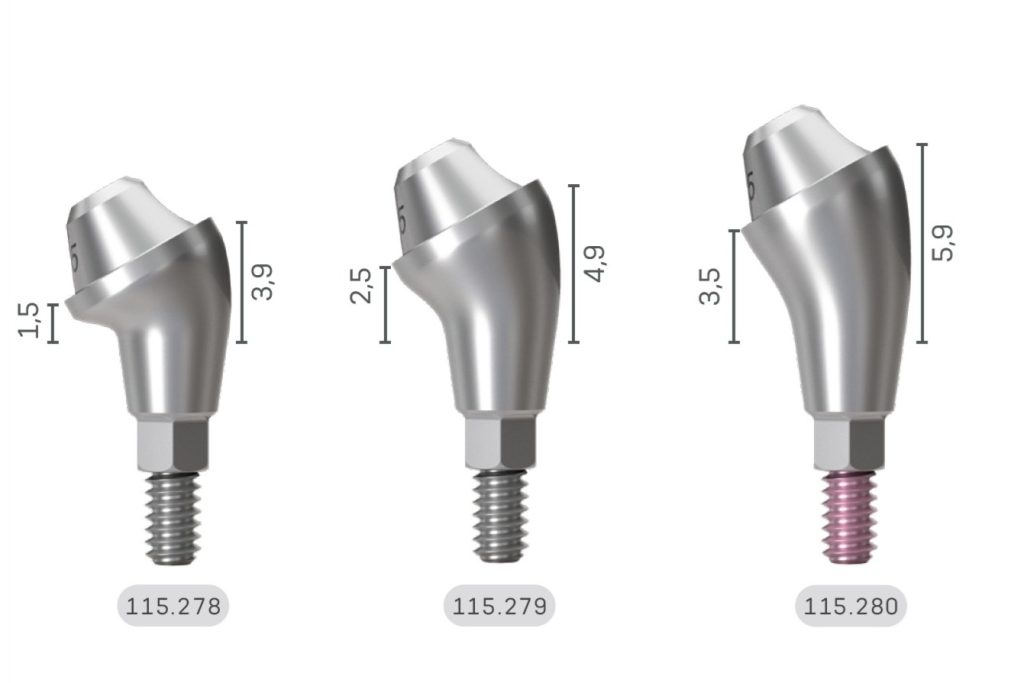
All of this ensures that the abutment is cold welded into the implant, creating a biological seal, junctional epithelium which will protect the bone and all peri-implant tissue.
Implant Dimensions
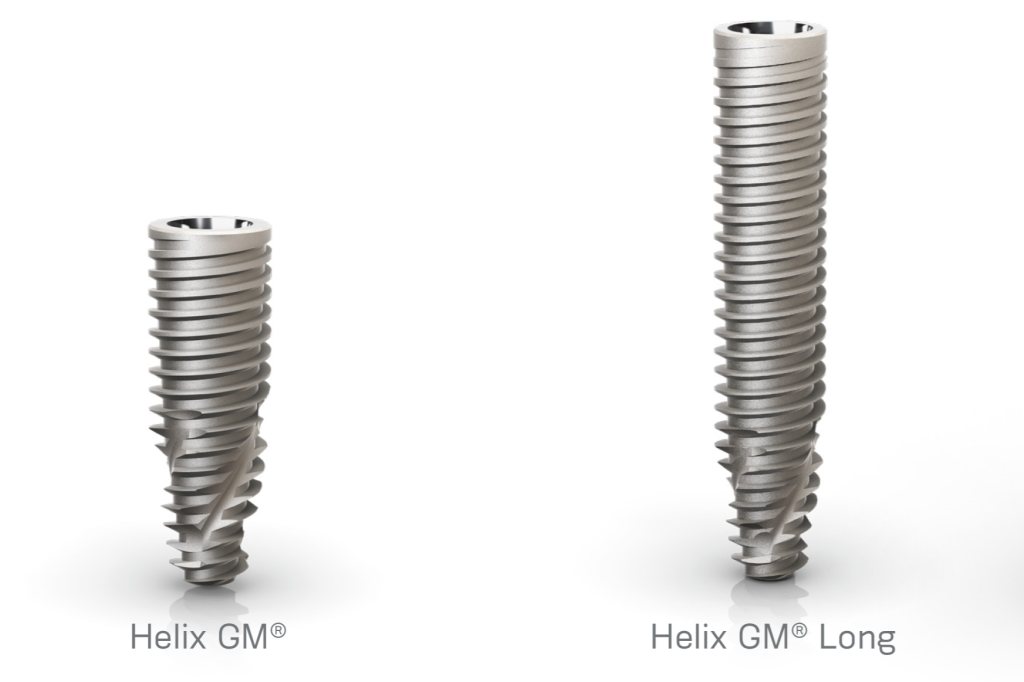
Implant system needs to cover all possible indications, from short implants of 4mm to long implants of 25mm. Since the indication for short implants is obvious, we want to avoid damage to anatomical structures, long implants help reach those crotical plates and ensure stable implant positions even in soft bone. Without long implants it is impossible to perform true All-on-4 treatment.
Implant diameter also needs to range from verry narrow of 2.9 mm to wide diameter implants of 5, even 6 milimeters.
Even though there is a wide range of diameters, the platform should be the same for convenience. It means that you can use one abutment on all implant diameters.
Implant Material and Surface
Most implants are made from Titanium alloys. There are, of course, Zirconium implants, called Ceramic implants, but that is a niche compared to sheer number of Titanium implants used in the world today. The topic of Zirconium vs Titanium implants is as interesting as polarizing and deserves a dedicated article.
We will concentrate on Titanium alloys used today, and one of the most often used is Titanium grade 4.
There have been many over the years, from grade 1 to grade 5, and they differ in chemical composition, but basically grade 4 is considered pure Ti alloy and even though it is weaker than grade 5, it is preferred for intraosseous use. Grade 5 Titanium has Aluminium and Vanadium in it’s composition, which makes it stronger, but potentially more toxic. Because of it’s properties, grade 5 Ti alloy is mostly used for abutments and screws, which need to be stronger. It is worth mentioning that some manufacturers, like Neodent, use cold machining for Ti grade 4, which increases it’s strength brings it on par with grade 5 without the potential toxicity.
There are hybrid alloys, like Straumann Roxolid® which is basically Titanium mixed with Zirconium for better strength and potential anticorrosive attribute. Other implant brands also have similar alloys.
But, even though material is important, implant surface makes a lot of difference in how the bone heals around implants. Straumann developed SLA surface years ago, and revolutionized the implant world. Suddenly the survival rates jumped. And since then, almost every other brand has a similar surface. SLA stands for Sand Blasted Acid etched surface and that is a process that basically increases the bone to implant contact area, thus ensuring osseointegration. Neodent has NeoPoros, which is very similar to Straumann’s.
Another level of implant surfaces are active, hydrophilic surfaces, like Straumann Active and Neodent Acqua, which promote osseointegration early on. Unfortunately, those surfaces raise the price of an implant while benefiting only for situations with problematic bone like D4 or poor anchorage. When implant has sufficient torque, it is questionable if active surface offers any advantage.
The Digital Ecosystem: Planning and Execution
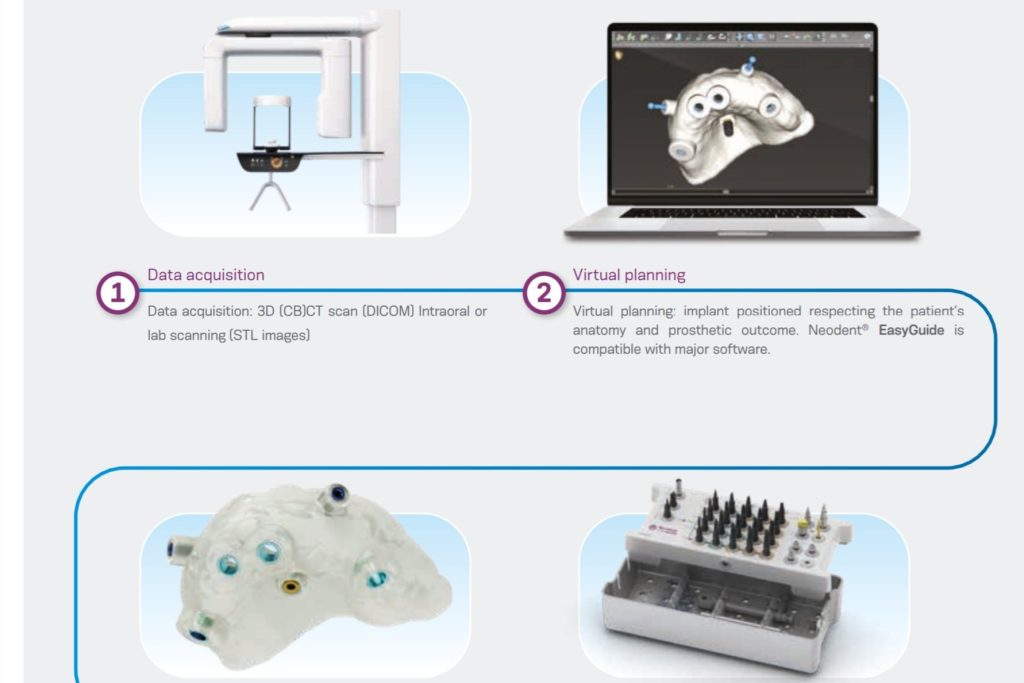
Today, an implant system is only as good as its digital infrastructure. It is no longer enough for a brand to provide hardware; it must offer a seamless workflow for the planning, implementation, and restoration phases.
- Guided Surgery: This serves as an advanced tool for the surgeon, though it does require a significant investment in both specialized training and software acquisition.
- The Planning Phase: A robust system must integrate with CBCT and CAD software to allow for “prosthetically driven” implant placement before the first incision is even made.
- The Restoration Phase: Intraoral scanners have revolutionized the experience for both clinicians and patients, making the capture of digital impressions via scanbodies a “breeze” compared to traditional methods.
- Workflow Integration: If an implant system fails to offer a proper, open, or efficient digital workflow, its mechanical advantages mean very little in a modern clinical setting.
Conclusion: The Tool for the Task
Choosing an implant system is not about finding the “best” brand in a vacuum; it is about finding the most reliable tool for your specific clinical philosophy. For those of us following the Graft Free Implantology (GFI) concept, our requirements are higher because we often work where the anatomy is most unforgiving.
The “perfect” system for a GFI clinician is a synergy of:
- Aggressive Macro-design: Utilizing tapered geometry and active threads to achieve primary stability in native bone, which is a non-negotiable prerequisite for the One Abutment One Time (OAOT) protocol.
- Biological Connections: Utilizing platform switching, conical seals, and “cold welding” to protect the crestal bone and peri-implant tissues.
- Comprehensive Dimensions: A system must cover all anatomical needs, from narrow 2.9 mm diameters to lengths of up to 25 mm. Without implants longer than 16 mm, it is impossible to achieve a reliable All-on-4 restoration with the proper anterior-posterior (AP) spread required for stability.
- Material Integrity: Utilizing high-strength alloys (like cold-machined Grade 4 Titanium or Roxolid®) to ensure that even narrow-diameter implants can withstand functional loads.
- Digital Fluency: Ensuring the system is fully compatible with the modern digital workflow, from guided surgery to the final digital impression.
- Support: Continued education and training advised by Implant company.
Whether you choose a legacy system or a versatile modern powerhouse like the Neodent GM Helix, the goal remains the same: predictable results, shorter treatment times, and a “Simply Doing More” approach for the patient. At the end of the day, the best system is the one that gives you the confidence to say “yes” to a patient when the anatomy says “no”.


Leave a Reply